
Imagine a world where you wake up each morning feeling refreshed, motivated, and ready to embrace the day. No, this isn’t a fantasy, it’s the power of cultivating happiness through intentional habits. Happiness is more than just a fleeting emotion or the absence of stress; it’s a measurable, tangible state of well-being that positively impacts your mind, body, and relationships. Like any other commodity in life, the more you invest in it, the higher your chances are for a maximum return of your investment.
Yet, in our fast-paced, digitally connected world, achieving happiness can feel elusive. We spend hours scrolling social media, chasing likes and follows, or working late into the night, believing productivity is the ultimate key to fulfillment. But science tells a different story: happiness isn’t about constant activity or external validation, it’s about creating a balance of meaningful connections, mental clarity, and physical health. Think of it more of the what is inside affecting what is outside, the more positive your are, the brighter the world around you will look, as your perception focuses on the beauty of the world.
This blog post will guide you through the latest research on happiness, explain the biological and psychological mechanisms behind it, and provide you with actionable, science-backed habits to transform your daily routine. You’ll learn that happiness isn’t something you stumble upon; it’s something you can actively build, one habit at a time.
What to Expect:
- Insights into the neuroscience of happiness and its key drivers.
- How physical health and mental well-being are interconnected.
- A collection of simple, powerful habits to improve your mood and create lasting joy.
The Science of Happiness
What Defines Happiness?
Happiness is often misunderstood as a state of perpetual pleasure or constant cheerfulness. However, psychologists define it as a dynamic state encompassing both:
- Hedonic Well-Being: The pursuit of pleasure and avoidance of pain. This includes enjoying life’s simple joys, like savoring your favorite meal or laughing with friends. This looks more at short-term happiness goals.
- Eudaimonic Well-Being: A deeper sense of fulfillment that comes from purpose, meaning, personal growth, and life long commitments such as marriage. Examples include working on a passion project or helping others. This is an approach for long-term happiness.
Research highlights that eudaimonic well-being has a stronger, more enduring impact on life satisfaction than hedonic pursuits. A 2023 study in Frontiers in Psychology revealed that individuals who focus on long-term meaning report 30% higher happiness levels than those who chase short-term pleasures (Frontiers in Psychology, 2023).

How Your Brain Creates Happiness
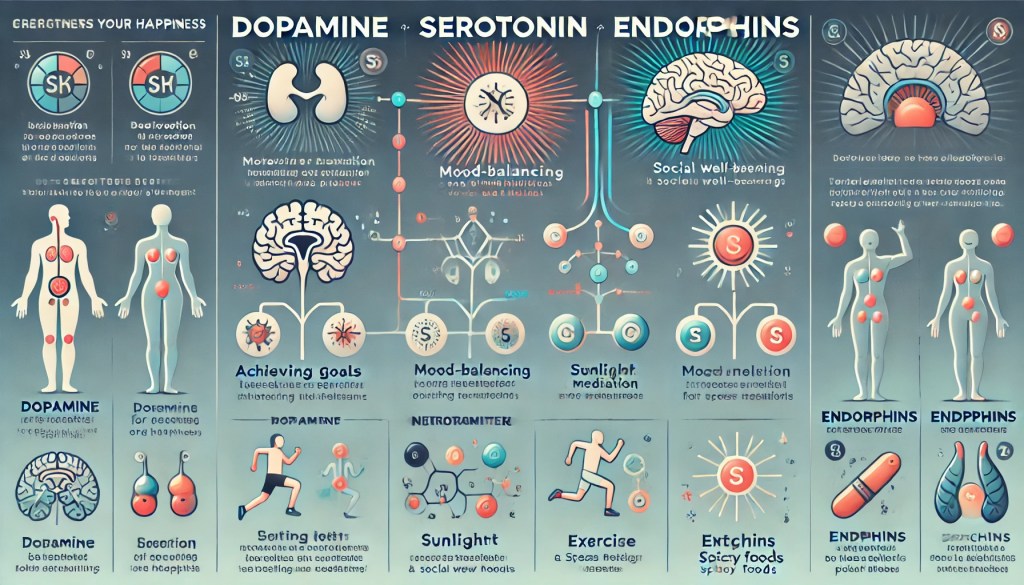
Happiness isn’t just a feeling; it’s a complex biological process involving your brain’s reward system and neurotransmitters. Here’s how it works:
- Dopamine: Known as the “reward molecule,” dopamine motivates you to seek out and repeat behaviors that bring pleasure or success. Completing a task or receiving praise triggers dopamine release.
- Serotonin: Often called the “happiness chemical,” serotonin contributes to feelings of stability, calmness, and contentment. It’s influenced by factors like diet, exercise, and exposure to sunlight.
- Endorphins: These natural painkillers are released during physical activity or laughter, reducing stress and boosting your mood.
Scientific studies confirm that certain behaviors can enhance these neurotransmitters. For example, regular exercise boosts dopamine and endorphin levels, while gratitude practices increase serotonin activity. It can be difficult to find one activity that boosts all 3 at the same time, so it important to diversify your daily routine to include at least one activity that for each. What activity relies on your own preferences and tastes, mix and match until you strike gold.
A 2022 study in the Journal of Positive Psychology found that just 20 minutes of daily mindfulness increased dopamine production by 15% and improved participants’ overall mood (Journal of Positive Psychology, 2022).
The Mind-Body Connection
Physical Health as the Foundation of Mental Wellness
The connection between physical and mental health is profound. Your body and mind operate as an interconnected system, meaning that when one thrives, the other follows. Chronic stress, poor sleep, and an unhealthy diet can disrupt this harmony, leading to both physical ailments and emotional struggles.
For example, stress triggers the release of cortisol, a hormone that, when elevated over time, reduces serotonin production and shrinks the hippocampus, a brain region critical for memory and emotion regulation. Conversely, regular physical activity not only strengthens your heart but also releases mood-boosting endorphins and increases serotonin levels. That is were a balance needs to be strived for the achieve happiness, try to equal out the equation as much as possible, if you perform an activity that causes you stress, follow it up with relaxing activity. For instance, after a long day at day, grab a few friends and head to an restaurant and just have a laugh.
Scientific Support:
- A 2023 study published in The Lancet Psychiatry found that individuals engaging in 150 minutes of moderate exercise per week were 35% less likely to experience depression.
- Diets rich in omega-3 fatty acids, like those found in fish, walnuts, and flaxseeds, were associated with a 25% lower risk of mood disorders (The Lancet Psychiatry, 2023).
Have you ever felt irritable after a poor night’s sleep or sluggish after a junk food binge? That’s your body signaling the need for better balance. Listen to your body, if something feels wrong, most likely than not, it is. Try access what may be the reasons for it and adjust.
Simple Habits to Boost Your Mood
1. Start Your Day with Gratitude
Gratitude doesn’t just make you feel good; it has the power to transform your entire mindset by reshaping how your brain processes and reacts to the world around you. Neuroscientific studies reveal that practicing gratitude activates the brain’s prefrontal cortex and anterior cingulate cortex—regions associated with emotional regulation, decision-making, and empathy. This rewiring creates a positive feedback loop, making it easier to focus on the good in life and less likely to dwell on the negative.
Moreover, gratitude isn’t just an emotional experience; it’s a holistic practice that benefits your physical health. According to research, expressing gratitude regularly can lower blood pressure, improve immune function, and reduce stress hormones like cortisol. The impact is so profound that some psychologists compare gratitude practices to a mental workout for building resilience and emotional stability.
A compelling study in Emotion (2021) underscored these benefits. Participants who took just a few minutes each day to write down three things they were grateful for experienced a 23% reduction in depressive symptoms over two months. They also reported better sleep quality, higher energy levels, and a notable increase in overall optimism (Emotion, 2021). This simple practice didn’t just change how they felt; it improved their outlook and their ability to handle challenges.
Practical Tip: Start your gratitude journey with a journal. Spend five minutes each morning listing things you appreciate, no matter how small or routine they may seem—a warm cup of coffee, a friendly smile from a neighbor, or even the sound of birds chirping outside your window. Over time, you’ll find yourself noticing and savoring these moments more naturally.

2. Engage in Mindfulness and Meditation
Mindfulness is the art of anchoring yourself in the present moment—being fully engaged with what you’re doing, feeling, or experiencing without judgment. It’s a simple yet transformative practice that helps break the cycle of stress, overthinking, and emotional overwhelm. By training your mind to focus on the here and now, mindfulness enables you to respond to life’s challenges with calmness and clarity rather than reactive stress.
Scientific research continues to highlight the powerful benefits of mindfulness for mental and physical well-being. A study published in the Journal of Psychiatry found that practicing just 10 minutes of mindfulness meditation daily led to a 30% reduction in cortisol levels, the primary stress hormone. Participants also reported feeling more equipped to manage anxiety and emotional fluctuations (Journal of Psychiatry, 2021). These findings suggest that even a brief commitment to mindfulness can yield profound results over time.
How to Start:
- Guided Meditations: Beginners often find it helpful to start with guided sessions on apps like Calm or Headspace. These tools offer a variety of practices tailored to different needs, such as stress relief, better sleep, or focus enhancement.
- Mindful Everyday Activities: Mindfulness isn’t limited to sitting in meditation. Practice being present during simple daily tasks like eating, walking, or even brushing your teeth. For instance, focus on the taste and texture of your food instead of eating while distracted by a screen.
Relatable Example: Picture this: you’re sipping a warm cup of tea. Instead of hurriedly gulping it down while scrolling through your phone, you pause. You take a deep breath, notice the soothing warmth of the mug in your hands, the rich aroma wafting up, and the way the tea tastes on your tongue. This small mindful moment can transform a mundane task into a grounding, joyful experience.

3. Strengthen Social Connections
Social relationships are more than just a source of joy—they’re vital to our emotional and physical well-being. Having strong connections with family, friends, and loved ones fosters a sense of belonging, reduces stress, and provides a safety net during life’s challenges. These bonds create a ripple effect, improving not only our mental health but also our physical resilience.
The profound importance of relationships is beautifully captured in Harvard’s 80-year Study of Adult Development, one of the longest-running studies on human well-being. The findings revealed that the quality of relationships—not wealth, fame, or success—was the single most significant predictor of happiness and longevity. People with strong social ties reported higher life satisfaction and lived longer, healthier lives compared to those who were isolated or had poor relationships (Harvard Study, 2021). These connections help buffer against stress, lower blood pressure, and even boost immune function.
Practical Tip:
Nurturing relationships doesn’t have to involve grand gestures. Start small but stay consistent. Schedule a weekly coffee date with a close friend, set aside time for a family meal, or make it a habit to call a loved one just to check in. These little moments of connection, when practiced regularly, build the foundation for deeper and more meaningful relationships over time.
Think about the last time you had a heartfelt conversation with a friend. The warmth and comfort it brought likely lingered long after the interaction, reminding you of the value of sharing life’s ups and downs with someone you trust.

My Happiness Journey
Happiness isn’t something I always prioritized. Like many, I thought it would come naturally once I achieved certain milestones. But over time, I realized that happiness isn’t a destination, it’s a daily practice. The more I seek happiness, the longer the road ahead of me felt. I realized that it is not about massive shifts in my day-to-day routine, but small changes everyday that build up to everlasting habits.
One of the biggest shifts came when I started implementing gratitude journaling and mindful movement into my routine. These small changes helped me feel more present and less stressed, even on challenging days. It’s not about perfection; it’s about progress. When I started I was hypercritical of myself, such as when journaling, I was always downplaying my achievement or overweighing my mistakes, but as I got into the rhythm, I started to detach my own judgements, and rather just documenting what happened throughout the day. I started to criticize less, and appreciate more, not only my own life, but the world around me.
Your happiness journey will be unique, but it’s worth every step. Start small, be patient, and watch how these habits transform your life.
Your Path to Lasting Joy
Happiness isn’t a finish line; it’s a journey of intentional habits and self-discovery. By understanding the science behind joy and incorporating simple practices like gratitude, mindfulness, and physical activity, you can create a life filled with meaning, resilience, and fulfillment.
Start today by picking one habit from this list. Commit to practicing it for a week, then add another. Happiness grows when cultivated.
Enjoyed this post? Share it with friends or explore more transformative content on Health Flow Hub. Together, let’s unlock the secrets to a happier, healthier life!

And remember, Flow with ease !!

Leave a comment